Wednesday, August 27, 2014

My Top 100 Directors: 60-41


60. Terence Malick (Tree of Life; Thin Red Line)
There really are few directors quite like Terrence Malick.  In terms of my 5 film rule, it took Malick all of about 38 years to direct 5 movies.  Despite the scores of praise heaped on his first two films, Badlands and Days of Heaven, I believe it is when Malick came out of his self imposed exile that his truly great work began.  Thin Red Line, The New World and my personal favorite Tree of Life are all among the best films of the last two decades.  Malick’s style also began to emerge, and with Tree of Life as well as Line, he really stuck a big middle finger up to conventional narrative and made films based more on feeling than story.  Even if we get a film a decade, they’re almost always worth it.


59. Gus Van Sant (Elephant; Last Days)
Gus Van Sant has been among the leading independent directors for decades.  His Drugstore Cowboy and My Own Private Idaho were masterpieces of Generation X cinema.  Van Sant was eventually tempted by things like money and more high profile gigs, and has even earned himself some recognition by the establishment for his work on Good Will Hunting and Milk.  The smaller Van Sant films are always my favorites, and with some films like Elephant, Last Days, or Paranoid Park few directors are as relevant and good.  He’s become something of a master of long takes, and well that’s something I always appreciate. 


58. Frank Capra (Mr. Smith Goes to Washington; It Happened One Night)
Although his major films all seemed to have a central theme, Frank Capra is probably the central figure in my greatness through great films debate.  From It Happened One Night through It’s a Wonderful Life, there was no better director in all of Hollywood.  He pulled down 3 best director Oscars in 5 years, a mark that will probably never be equaled, and on top of that all three films are still amazing today.  It Happened One Night might still be the greatest of all screwball comedies, and every movie and show about insider politics owes a special debt of gratitude to Mr. Smith Goes to Washington, for my money the best film from the legendary year of 1939. 
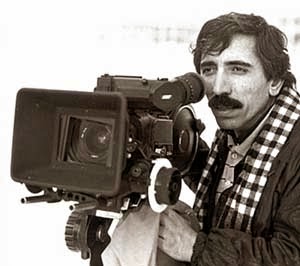

57. Mohsen Makhmalbaf (Marriage of the Blessed; The Cyclist)
There are always debates amongst film scholars between various figures.  Do you go for Hou over Yang, Godard over Truffaut, Keaton or Chaplin, Szabo over Jancso, or in the case of Iranian cinema Makhmalbaf or Kiarostami?  We can argue this point from now until forever but there has never really been any debate internally.  Perhaps Kiarostami has enjoyed a more overall consistent career longer, but his high points to me never came close to Mohsen’s.  Whether it was Marriage of the Blessed, Boycott, The Cyclist, Gabbeh, Moment of Innocence etc. his work has been the highpoint of Iranian cinema.  Stylistically the man is a marvel, and much of what I know about Iran has come from his extraordinary work.


56. Ousmane Sembene (Xala; Camp de Thiaroye)
The unquestioned master of African cinema.  Senegal’s Ousmane Sembene was an accomplished author before becoming his nations first true filmmaker, and he spent the better part of five decades making the best of all African movies.  His films are highly critical, often full of dark comedy, and he has never allowed the many financial limitations get in the way of some truly extraordinary stories.  If reading his name is making you scratch your head, please check out some of his work.


 55. Sergei Eisenstein (The General Line; Battleship Potemkin)
We’re getting into some legendary territory here with Eisenstein, the master of montage and the figurehead of the Soviet film movement.  Although he managed to complete three excellent sound features, Eisenstein’s greatest legacy remains his silent work.  There might not be a more influential silent film than Potemkin, and Eisenstein’s films and writings have become a veritable textbook in film editing.  His later work pioneered deep focus photography and established a unique bit of versatility. 


54. Bela Tarr (Satantango; Damnation)
In the realm of depressing and dreary Eastern European cinema filled with bleak landscapes, long shots, and sad people Bela Tarr is in a class all of his own.  Long a fan of lengthy takes, starting with 1987’s Damnation Tarr decided all his films looked better in black and white and hasn’t looked back since.  Satantango is over 7 hours of awesomeness and before there’s a single cut in the film it’s a pretty clear indicator of whether or not Tarr’s style is for you.  He is the extreme continuation of earlier long take existential European art house filmmakers and his predecessors I’m sure would be proud.


53. Frederick Wiseman (Public Housing; Titicut Follies)
When it comes to cinema verite the only name you really ever need to know is Frederick Wiseman.  It’s hard to rank Wiseman amongst other filmmakers because he is the only one on this list whose primary work is in documentaries.  Also he is nowhere near the master manipulator that most documentarians are from Flaherty to Moore.  Wiseman picks a subject, films it and offers no commentary or analysis.  There are no talking heads, no clever edits just his subject in it’s natural habitat.  Over the last nearly 50 years he’s had some pretty exceptional subjects as well, which might help explain why his films are so damn good.  I’ve seen probably two dozen of his movies and I have no idea how he manages to make them so compelling and worthwhile.  Although with many directors on this list their greatest gift is their subtlety.


52. Max Ophuls (La Ronde; There’s No Tomorrow)
Whenever a director can make the claim that he was a huge influence on Stanley Kubrick I need to pay attention.  Max Ophuls spent his career bouncing from one country to another carrying his extraordinary style with him everywhere.  Even his few American movies remain among the best of the late 40s.  Ophuls hit his stride in the 50s in France during the twilight of his career where his four late films perfectly captured his essence.  Ophuls dealt mostly with the upper classes, in period pictures, romance, and filmed all of his movies as if they were one extended waltz.  Ophuls was also one of those masters of long takes long before it was fashionable, and his style truly stood out amongst all his peers. 


51. Yasujiro Ozu (Early Summer; Good Morning)
Amongst all the many idiosyncratic foreign directors out there, few created a style unto themselves quite like Yasujiro Ozu.  Frankly put, no one seems to have even attempted to make a movie like Ozu in the 50 odd years since his passing.  The king of Japanese cinema, Ozu spent his early days bouncing around different genres before eventually settling on the Japanese family structure.  Many of his films are simply different aspects of family relationships and so many of those films are transcendent.  I’ve always been a fan of the films that seemed a little out of character, whether it be Where are the Dreams of Youth?, Tokyo Twilight, or Good Morning, but it’s hard to argue with what his bread and butter were. 


50. D. W. Griffith (Intolerance; Birth of a Nation)
When it comes to historical importance, few can even begin to match the legacy of D. W. Griffith.  Granted much of that legacy was built up by Griffith himself, but in the 1910s the man had no peers in all of world cinema.  Even today Intolerance remains one of the all time greatest films, and as polarizing as Birth of a Nation might be, it’s hard to deny what an extraordinary achievement it was in cinema.  Griffith’s post Intolerance films are also pretty damn incredible, and he even managed to produce some unfairly overlooked sound films before fading into obscurity.  You can argue though that without Griffith America might not have ever become the juggernaut of world cinema it has been. 


49. Miklos Jancso (The Red and the White; Red Psalm)
Remember my comment about Szabo over Jancso a few entries back?  Well this is my take on that debate.  Miklos Jancso died earlier this year, but not without establishing himself as the greatest of all Hungarian directors.  Jancso focused many of his films on historical events, and like Tarr after him loved to use extremely long and elaborate tracking shots.  His films were often allegories of Soviet occupation and one of his most prominent themes was the abuse of power in his movies.  From a purely visual sense though it was always amazing to watch this man work. 
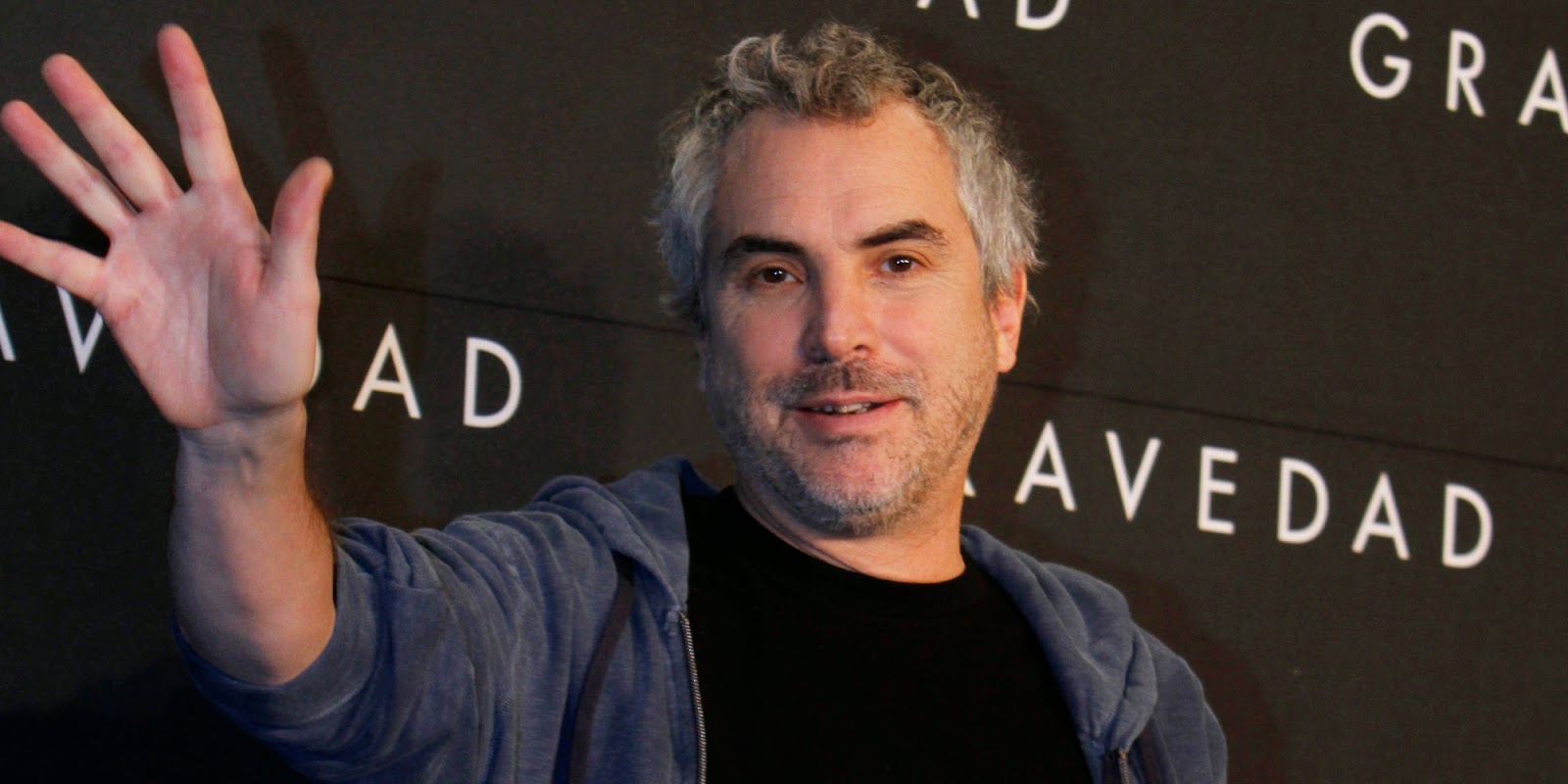

48. Alfonso Cuaron (Children of Men; Y Tu Mama Tambien)
You might be noticing a pattern by now of my fondness for directors who can shoot long takes.  Cuaron finally got himself a best director Oscar for his work on last year’s Gravity, and frankly it’s about damn time.  Gravity is one of those rare films made where you scratch your head an wonder just how the hell they did it.  In today’s Hollywood where everything up to and including the moon are CGI, it takes a lot to really impress people, and that’s what Gravity did.  It doesn’t hurt that he also directed the best Harry Potter film (Prisoner of Azkaban), and I can’t praise Children of Men enough.  As a filmmaker though I’m not sure if anyone is capable of making films as impressive as Cuaron right now. 


47. Richard Linklater (Before Sunrise; Dazed and Confused)
It’s often a lame cliché to say someone is the voice of a generation, but when that generation is X, Richard Linklater seems to perfectly fit that description.  From his first film, Linklater has been making uniquely personal films for those children of the early 90s.  His animated work is extraordinary as well, and I can’t begin to recommend Waking Life and Through a Scanner Darkly enough.  Dazed and Confused is still the ultimate in nostalgic high school comedy, and I haven’t even mentioned the Before trilogy.  Before Sunrise, as well as it’s two follow-up films Before Sunset and Before Midnight are about the best thing to happen to cinema in the past twenty years.  Oh yeah, and there are plenty of extremely long takes in those films as well, wouldn’t want to break the streak.


46. Satyajit Ray (Pather Panchali; Distant Thunder)
Some topics of cinema aren't even up for debate, like who the master of suspense was or in this case who was India's greatest filmmaker.  Satyajit Ray became an icon of international cinema on par with Akira Kurosawa and Federico Fellini during the 50s and maintained his status as the most important director in India for the next five decades.  His films were a stark break from the mainstream Bollywood films, and he took more of a cue from Jean Renoir and the neo-realists, than his peers.  Although best known for his Apu trilogy, Ray’s 60s and 70s work might have been even better.  The absolute master of Bengali cinema.


45. F. W. Murnau (Sunrise; Faust)
Another in a long list of silent film pioneers, F. W. Murnau might damn well be the best of them all.  During the 1920s Murnau became arguably Germany’s greatest filmmaker in a decade known for amazing filmmakers.  He produced one of the most iconic horror movies ever in Nosferatu, which still might be the best vampire movie ever made.  Before leaving for the US, Murnau also made the nearly title-less masterpiece The Last Laugh and the only truly exceptional adaptation of Faust.  His first film in Hollywood, Sunrise however is the reason he’s on this list.  It is on the short list of the greatest silent films of all time and is absolutely perfect.  Sadly Murnau died a few years later before having a chance for further greatness.


44. Jacques Rivette (Celine and Julie Go Boating; Up Down Fragile)
Of the original five Cahiers du Cinema critics turned directors in the French New Wave, all took remarkably different paths.  For Jacques Rivette, the most criminally overlooked of the bunch, he made a series of improvisational films with exceptionally large running times and a style unlike any other.  His films have usually suffered a fate of poor distribution and for a very long time Out 1 (his 12 hour opus) was considered more the stuff of legend.  I happened to be present for possibly Chicago’s only screening of the film over two days and it was one of those truly incredible cinematic moments.  I’ve since tracked down as many of his films as I can and very rarely am I disappointed.  His work is often challenging, frequently head scratching, but once in a while it’s just phenomenal.


43. Peter Watkins (La Commune: Paris 1871; Punishment Park)
The last time I made this list I might not have even known who Peter Watkins was.  Over the last decade his work has probably been the high point of my movie watching.  He has specialized in the mockumentary, but his films generally focus on two scenarios, either historical recreation, or hypothetical Orwellian narratives.  All of his films are social commentaries, and he shoots his films like verite documentaries creating an eerie sense of reality.  My first introduction to him was Punishment Park, and I honestly had to look up whether or not it was based on a real place after watching it, his movies are that damn good. 


42. Francois Truffaut (Jules and Jim; The 400 Blows)
Another new wave veteran, Francois Truffaut enjoyed probably the greatest commercial success of his directors because at the end of the day he made movies he would have wanted to see growing up.  Often times this resulted in lighter faire, and crowd pleasing efforts, but there certainly were some great films among them.  His semi-autobiographical Antoine Donel films, particular The 400 Blows are French cinema at it’s finest.  Few French directors captured the joy and wonder of cinema quite like Truffaut.


41. Roberto Rossellini (Voyage in Italy; Open City)
The second of my big 4 Italian directors, Roberto Rossellini was there at ground zero for neo-realism.  Open City remains one of the most astonishing films of the 40s in terms of it’s content, violence, and in the simple wonder of how the hell it even got made.  In the process Rossellini became a one man cinematic revolution.  He did eventually outgrow the style, and his work with Ingrid Bergman helped usher in a whole new era of world cinema, the existential angst of the upper classes.  Rossellini managed to influence damn near every filmmaker who came after him, and through him future directors like Federico Fellini and Michelangelo Antonioni got their starts. 

Sunday, August 24, 2014

My Top 100 Directors: 80-61


80. Raoul Ruiz (Manoel on the Island of Marvels; The Three Crowns of the Sailor)
Chilean exile turned extremely prolific filmmaker, Raoul Ruiz made upwards of 100 films over the course of his career.  I’ve seen about a fifth of them, and that’s enough to put him on this list.  Like many of my favorite filmmakers Ruiz likes to make films in an often surreal fashion.  His early work especially is politically motivated, but Ruiz found a way to lend his style to every type of project he took on.  Some where glamorous, others were simply ways to fill his obsessive need to keep working.  I wrote about him during his passing, and I’m sure that eulogy did better justice than this paragraph.


79. Preston Sturges (Sullivan’s Travels; Unfaithfully Yours)
Like Billy Wilder, Preston Sturges rose up the ranks at Paramount from screenwriter to director in the early 40s.  Whereas Wilder turned that into a long prolific career complete with numerous Oscars, Sturges had a star that burned incredibly bright before ultimately fading into obscurity.  One of the earliest writer-directors in the studio system to have creative control, he set the bar for film comedy in the 40s and his work still holds up remarkably well.  After his lucrative career at Paramount ended he bounced around and made a series of disastrous pictures that were either outright flops, or re-edited and buried.  However from Christmas in July through Hail the Conquering Hero, few in Hollywood were ever better.


78. William Wyler (Ben-Hur; The Best Years of Our Lives)
Another master of classic Hollywood cinema, William Wyler became a sticking point in the old auteur debate.  Some argued that his technical skill and excellent filmmaking skills were irrelevant because he didn’t put his own signature on his pictures.  A silly idea to me, Wyler falls between the two great schools of directors, he was great because of his great films, and those films were great because of him.  Wyler was using deep focus photography probably earlier than anyone in Hollywood, and it was his frequent collaborations with Gregg Toland that led to Toland working with Ford and eventually Orson Welles.  A great fan of staging in depth, Wyler was the ultimate Hollywood professional, taking home three best director Oscars, and making great movies in the 30s, 40s, 50s, and 60s. 


77. Bernardo Bertolucci (The Conformist; Last Tango in Paris)
There are a number of directors who seem charmed at the start.  A run of impeccable films that seem to get better with each release.  For Bernardo Bertolucci he was one of these filmmakers.  He got his start writing for Passolini, then almost at the same time directed his first film The Grim Reaper.  He steadily improved until the one-two punch of The Conformist and Last Tango in Paris, then came the downswing.  He followed those two masterpieces up with the overly long hot mess of 1900, then the bafflingly uncomfortable Luna, and the largely forgettable Tragedy of a Ridiculous Man.  He rebounded tremendously with The Last Emperor which wound up being his greatest success.  The years since have seen some hits and misses, but for a brief period in the early 70s Bertolucci seemed destined to be Europe’s finest filmmaker.


76. Terry Gilliam (Monty Python and the Quest for the Holy Grail; Brazil)
Terry Gilliam has made a long and interesting career out of being one hell of an oddball.  The only American in Monty Python, he was best known for those incredibly bizarre animated interludes in their Flying Circus.  In the post-Python era though Gilliam found himself making some truly bizarre and occasionally brilliant movies.  Nearly all of his films have a surreal angle to them, and like many of my favorites Gilliam was no stranger to wide angle distortions.  Recently he seems to have hit a wall with many of his projects falling apart in mid-production or outright failing.  However I challenge you to find another filmmaker with the same warped point of view on the world as Gilliam, whose visual sense has always been superb.  Not to mention the fact that he directed the funniest movie in the history of film.


75. Michael Powell (A Matter of Life and Death; Peeping Tom)
Along with his screenwriting/producing partner Emeric Pressburger, Michael Powell absolutely dominated British cinema throughout the 40s and early 50s.  His eye for color was unmatched, and throughout the decade they just seemed to keep getting better.  Eventually the partnership fell apart and Powell made one spectacular movie that got him into enough hot water to earn a lengthy ban from filmmaking with Peeping Tom.  Considered a British answer to Psycho, the film was far ahead of it’s time in examining the psycho-sexual horror relationship.  Powell settled into something of an elder statesman after Peeping Tom, directing a few films but his legacy was firmly established in those multiple collaborations with Pressburger.


74. Lewis Milestone (All Quiet on the Western Front; Of Mice and Men)
It’s a pretty safe bet that if you directed my second favorite film of all time you’ll probably wind up on a list of my top 100 directors.  Milestone actually got his start as a first rate comedic director, and helmed arguably Harold Lloyd’s best feature, The Kid Brother.  However with All Quiet on the Western Front Milestone was truly without peer in American cinema.  Milestone didn’t let the limitations of the new sound equipment get in his way and freely moved his camera all over the place.  Staging elaborate scenes in depth, constantly tracking all over the place, and perhaps best of all not using a note of a musical score for what’s damn near the greatest movie ever.  His career carried into the 60s, but arguably his last great masterpiece was 1939’s Of Mice and Men, a film so damn good and heart breaking I’ve been a little scared to watch it again.


73. Nagisa Oshima (In the Realm of the Senses; Death by Hanging)
Every damn country had a new wave of some kind in the 50s and 60s.  Japan was arguably the closest to France in terms of overall innovation and impact.  Of the new school of Japanese directors, none were as interesting or enigmatic as Nagisa Oshima.  Oshima made plenty of auteur proponents scratch their heads because he simply refused to develop a signature style.  If he made one film exclusively in long takes, he’s follow it up with enough edits to make Sergei Eisenstein jealous.  Shoot a film in deep focus with a wide angle lens, next up would be a film with flat depth shot entirely with telephoto lenses.  His themes seemed to center on the morally depraved and like Shohei Immamura or Yasuzo Masumara he liked to deal with obsessed and often despicable people.  His greatest commercial and artistic success was In the Realm of the Senses and it’s still a film that’ll make you wonder how the hell it ever got made. 


72. David Fincher (Fight Club; Zodiac)
Arguably the best of all the filmmakers who got their start making music videos, David Fincher is an American stylist without peer.  It took quite some time for people to realize how damn good of a filmmaker he was, and believe it or not Fight Club was largely overlooked upon it’s original release.  By the time he made Zodiac however people were paying attention.  Fincher seems like a lock to get an Oscar nomination with each release now and he hasn’t really disappointed.  His work on House of Cards as well was simply outstanding.  Fincher might be the only director on my list with impressive cinema, TV, and music video credits on his resume. 


71. Peter Jackson (Lord of the Rings; Dead Alive)
New Zealand’s best known director was a cult favorite of mine for years.  One of the first directors I decided I needed to pay attention to.  I tracked down old bootleg copies of Bad Taste, Meet the Feebles, and the version of Dead Alive called Brain Dead long before Jackson went to the Shire.  The tremendous success of the Lord Of the Rings trilogy earned Jackson damn near all the money and put him on a short list of the best known directors working today.  His post LOTR work has been spotty, although I did love King Kong, I’m holding out hope that when he finishes the begrudging Hobbit films he’ll get back to doing something amazing, preferably with a lawnmower and some drug dealing muppets. 


70. Charlie Chaplin (Modern Times; The Gold Rush)
I know this might seem criminally low for Chaplin, but my list, I make the rules.  Chaplin had a truly unique career, one that enabled him creative control for 50 solid years.  It didn’t take long for Chaplin to grow out of the idiotic nonsense of Keystone, his first company.  He stumbled onto the formula of comedy + pathos = gold.  Chaplin was notoriously insecure in his private life and found himself quite the womanizer, leading to multiple marriages and enough children to fill a baseball team.  Chaplin was also never in any rush to get his work out.  He took his sweet time between projects, and often filmed without a script, just allowing for hours of improvisation where he’d hone his bits to perfection.  His stretch from The Gold Rush to The Great Dictator are among the finest films anyone will ever make.  Even his later sound career had a few outstanding films, notably Monsieur Verdoux and my favorite A King in New York.


69. Luchino Visconti (Rocco and His Brothers; Vaghe Stelle dell’Orsa)
The first of my “big 4” Italian directors, Luchino Visconti had undoubtedly the easiest upbringing.  Part of the aristocracy he found himself like many spoiled rich kids thinking about Marxism and fighting for leftist causes.  Not bad to take the left when living in a fascist state, Visconti’s earliest films, Ossessione, La Terra Trema, and Bellissima all focused on people far below the Count’s social status.  Great as some of these films were Visconti found himself hitting his stride when he started to tackle his own personal reflections, most famously The Leopard.  For my money though Rocco and His Brothers is about as great of an Italian film as you’ll ever see.  Whether dealing with luxury or poverty, Visconti always made his films compelling.
 

68. Andrzej Wajda (Ashes and Diamonds; Kanal)
In the 50s, Poland was one of many Soviet satellites to open state funded film schools.  Of that first crop of Polish filmmakers none have had quite the impact as Andrzej Wajda.  Wajda has consistently turned a skeptical mirror up at communism and the myth of the state.  His earliest films, particularly Ashes and Diamonds are masterpieces of deep focus claustrophobia and self loathing and doubting would-be patriots.  With Man of Marble and it’s sequel Man of Iron, Wajda got even more critical of the cult of heroism often manufactured by the party.  Still active at 88, he’s received damn near every award you can name and has remained Poland’s greatest filmmaker.


67. Josef Von Sternberg (The Blue Angel; Anatahan)
One of the original auteurs, Josef Von Sternberg has long been the subject of many meticulous study and over-analyzation.  Von Sternberg was a world class master of light and shadow and frequently worked as his own un-credited cinematographer.  A temperamental director he fought with every producer he came in contact with.  When his collaborations with Marlene Dietrich began losing money for Paramount the director found himself struggling to find projects afterwards.  He did manage to direct a few worthwhile films, notably the Shanghai Gesture (1941) and arguably the best film of his career Anatahan (1953).  Von Sternberg’s best work though probably runs from 1927’s Underworld through The Scarlet Empress (1934).  The man was a walking textbook on movie lighting, and no matter how absurd some of his stories might have been, there was no comparison for the visuals.


66. Wes Anderson (Rushmore; The Darjeeling Limited)
The king of the hipster directors, Wes Anderson has been making variations on the same movie for the last 18 or so years.  Never one to get too serious or melodramatic his work is often hilarious without reverting to below the belt slapstick.  I can only say, seeing any of his movies is probably all you need to know about how the man operates.  We might also have him to thank for reminding the world how awesome Bill Murray is.  Not sure the man has a bad movie under his belt, and I can’t wait to see what he’ll release next.  When it comes to directors who make their movies great, I’d say Anderson is doing that as well as anyone these days.


65. James Whale (Bride of Frankenstein; The Invisible Man)
British born James Whale was one of the few standouts in fledgling Universal studios back in the early sound era.  He found himself a bit of a golden boy when Frankenstein forever linked the studio with movie monsters, and followed it up with some of the best films of his era.  Never one to take things too seriously, Whale made the sequel a slightly campy horror film with more than a touch of humor.  His rendition of The Invisible Man is still surprisingly dark, but Whale wasn’t just capable of making iconic monster movies.  He directed probably the best version of Show Boat (1936) and helmed one of the era’s best romantic melodramas with Waterloo Bridge (1931).  His film career ended far too early, but not before leaving a legacy of great, varied movies, all with a sense of incredible design and a little humor.


64. Glauber Rocha (Black God White Devil; The Lion Has Seven Heads)
Although he only lived for 42 years, Glauber Rocha had one of the most incredible careers in all of South American cinema.  I won’t even begin to make sense of some of his politics, the man was the loudest and most defiant voice in third world revolutionary cinema.  He was extremely anti-capitalist and even advocated abolishing money entirely.  Following a political change in Brazil in 1971, Rocha went into voluntary exile where he bounced around before ultimately dying of a lung infection.  His early films reflect an angry, enthusiastic, and often violent advocacy for change.  A fan of using mythology and folklore in his films, Rocha was truly one of a kind and the leading figure of the Cinema Novo movement.  His films are an experience unlike anything else.


63. Zhang Yimou (To Live; Raise the Red Lantern)
Yimou was once among my absolute favorite directors period.  The best known member of China’s 5th Generation of filmmakers, Yimou rose to international acclaim with a serious of beautiful, yet highly critical films in the late 80s and early 90s.  Following a sense of mellowed out politics following the domestic banning of To Live, he went low key and still produced some interesting films.  Starting with 2002’s Hero though, Yimou went full on sell out and ventured into the world of large scale martial arts films.  I happen to love Hero, as well as House of Flying Daggers, and Curse of the Golden Flower but I do miss the old Zhang.  His films seem to get bigger and more polished with each effort leaving almost no semblance of the man who shook things up with Red Sourghum. 


62. Paul Thomas Anderson (Magnolia; Boogie Nights)
The other Anderson to emerge in the mid 90s, Paul Thomas is light years away stylistically and thematically from Wes.  The protagonists of PTA’s films are usually obsessive, often self destructive people who find themselves just barely surviving the wreckage of themselves.  Not always a pleasant watch, the handful of features PTA has made over the last 20 years have all been must see cinema.  For nearly all of his films though they seem to get better with each viewing, and several of his films particularly Magnolia are so full of clues, puzzles, and Easter eggs that every viewing reveals more to the overall mystery.  He has certainly earned the right to take his sweet ass time between projects, especially when the end result is as good as it’s been.


61. Sergio Leone (The Good, the Bad, and the Ugly; Once Upon a Time in America)
When it comes to the Western I don’t think there is any equal to Sergio Leone, and that includes John Ford.  Leone’s vision was unlike any other, and no one in all of cinema history exploited the full potential of the wide screen format quite like he did.  His trilogy of Westerns with Clint Eastwood are still arguably the three best films of the genre, and many people would say Once Upon a Time in the West was even better.  Although he wasn’t the most prolific of directors he did prove with his final film, Once Upon a Time in America that he was capable of making great cinema in another format.  A true master of space, composition, and how to get the most nail biting showdowns in all of cinema. 

Saturday, August 23, 2014

My Top 100 Directors (100-81)

This list has been an idea of mine for quite awhile.  I last updated this sometime around 2005-06, so needless to say it was in need of some tweaking.  Awhile back I started a preliminary list, and found myself with some 140 names.  Even when I started numbering this I still left some 120 people on the list and figured whoever didn’t get numbered got cut.  That said, oh my goodness there are some serious omissions here.  Even some directors that you should think I love are missing.  Which goes to show there are no shortage of great filmmakers around.
You may know by now that I prefer the term top to favorite or greatest.  Simply my personal ranking of the people I think are awesome.  The only requirement I set for this list is that I had to have seen at least 5 films from each director.  This requirement wound up being insanely easy, because well I’ve seen a lot of damn movies.  A great director is usually what motivates me above anything else to see a movie.  I’ve sat through a few stinkers simply because I loved the filmmaker.  The way some folks are drawn to movie stars and actors, I feel that way about a director. 

So about my numbering system.  I look at each director based on a few criteria.  First of all how many great films they made, whether or not they have a distinct personal style, influence, and the overall scope of their work.  For some directors they may have had a tremendous period of success followed by several decades of forgettable work.  Others have produced mostly good to great work over many decades without necessarily hitting the same highs as others.  Some simply make movies like no other and I tip my cap to them.  There are no measurable metrics just my personal feelings about each person involved.  I apologize in advance for all the names left off, the numbering of the people on there and everything else sure to offend. 

A topic for another blog, but essentially there seem to be two kinds of “great” directors.  The first are directors who are great because they make great movies.  These are the few who don’t necessarily mark each film with some personal stamp, but nevertheless have a track record of amazing movies (Michael Curtiz, Frank Capra, George Cukor).  Then there are the directors who make their films great.  This second group includes people like David Lynch, Alfred Hitchcock, Andrei Tarkovsky.  You can make your own bets now which group I admire more, either way they’re all great for their own reasons.

In the case of some people I find them overrated and they’re not on my list, some others might have been #101 if I just extended the list a bit.  A good look at my top 100 and film canon would probably give you fewer surprises reading this.  I also decided to list my two favorite films from each director as a way for you the reader to go out and explore their work.   


100. Mikio Naruse (Floating Clouds; When a Woman Ascends the Stairs)
Whereas many of you might say “who” I know of at least a few people who are angrily shaking their fists and vowing that the rest of my list is null and void.  Perhaps it’s the fact that Naruse doesn’t have a style that draws attention to itself that puts him a bit below some of his more renowned countrymen, but that doesn’t mean he isn’t well worth checking out.  His post-war masterpiece Floating Clouds in particular is a must-see.  Perhaps his greatest strength might be his one weakness, the fact that his style doesn’t draw attention to itself.


99. George Cukor (The Philadelphia Story; Adam’s Rib)
George Cukor got his start as Ernst Lubitsch’s assistant and went on to one of the longest and most well respected careers in Hollywood.  Known by many to be a woman’s director, not unlike Naruse, his best work came during his frequent collaborations with Katherine Hepburn.  Hepburn owned the rights to The Philadelphia Story and insisted Cukor direct, and well the rest is history as they say.  Cukor’s work with Judy Holliday as well is also not to be overlooked.


98. Dusan Makavajev (Love Affair: or the Case of the Missing Switchboard Operator; W.R. Mysteries of the Organism)
Arguably the strangest director to come out of Eastern Europe in the 60s (and that’s saying something) Makavajev gained some notoriety in the US for his graphic sexual films of the early 70s.  For my money Love Affair, a surreal murder mystery in reverse is still his finest achievement.  He pushed the boundaries of what cinema could be and naturally found himself in frequent hot water with the powers that be in Yugoslavia.  So many future Eastern Europeans owe the man a debt of gratitude for expanding just what cinema could be.


97. Krzysztof Kieslowski (The Decalogue; Three Colors: Red)
I’ll admit it now, Kieslowski is too low.  I’m sorry, I don’t know what happened.  The leading Polish filmmaker in the post-Wajda 70s, Kieslowski achieved his greatest success at the end of his life, breaking through in a big way with his Three Colors trilogy made in exile in France.  The ten part Decalogue is soul damaging stuff, based loosely on the ten commandments, it is still his finest hour, and certainly worth the massive running time.   

96. Paul Verhoeven (Robocop; Turkish Delight)
Despite being familiar with Verhoeven’s work throughout most of my life (I first saw Robocop when I was about 6), I still look at him as a relatively new discovery for me.  Like Makavajev he pushed sex on film ahead sometimes in disturbing and unsettling ways, and the man never shied away from anything.  The death of Murphy in Robocop is still one of the most brutal and unsettling scenes in all of movies.  The man was even great at making bad movies, I dare you not to be entertained by Showgirls.  Although he’s slowed down his pace substantially of late, there are no shortage of brilliant films from one of the Netherlands best exports.  Hopefully Hollywood will stop remaking his movies, because lets face it, it takes a special kind of vision to make Total Recall coherent.


95. Lars Von Trier (Dogville; Dancer in the Dark)
Lars Von Trier is probably the most polarizing filmmaker to emerge in the last 25 years.  Even his fans can’t help but scratch their heads in confusion after every other film.  Never a dull moment some of his films are just supremely hot messes, others are a hot mess in a good way.  A huge fan of melodrama he’s the extreme continuation of Rainer Werner Fassbinder and Douglas Sirk.  An eccentric who seems to get off on pushing people’s buttons and making them uncomfortable he’s been must watch cinema for years now.


94. Hayao Miyazaki (Spirited Away; Princess Mononoke)
My love of anime pretty much begins and ends with Hayao Miyazaki.  Japan’s best animated feature director, he might very well hold the title of best animated director in all of cinema.  Although his 80s work is extraordinary, he really hit his stride with Princess Mononoke and Spirited Away which helped earn the man some Oscar gold and set the bar so high for animated film no one has come close to reaching it since.


93. Claire Denis (White Material; Friday Night) 
Hey maybe I’m not sexist, an honest to god woman on my list.  Denis is of that post New Wave generation who first made her mark in international cinema with 1988’s Chocolat, not to be confused with the god awful 2000 movie.  In the meantime she’s delved into some strange human depravity, and examined a lot of by-products of French colonialism.  There’s a certain mesmerizing quality to all of her films that is not unlike Leos Carax, but perhaps not as strange.  White Material might just be her finest hour, but most people would probably point to Beau Travail. 


92. Wim Wenders (Paris, Texas; False Movement)
Of the new wave of West-German filmmakers to emerge in the late 70s and early 80s, none seemed as American obsessed as Wim Wenders.  His films take a foreigners look at the great American road trip, rock and roll, and a lifelong obsession with finding yourself in the middle of nowhere.  Like a lot of filmmakers his recent work has dropped off a bit, but for a time in the 70s (Alice in the Cities, False Movement, Kings of the Road) and into his first couple of International co-productions (Wings of Desire, Paris, Texas) he seemingly could do no wrong.  He’s something of an existential Jack Kerouac.


91. Michael Curtiz (Casablanca; Yankee Doodle Dandy)
Another in a long series of great American filmmakers who got their start in the German film industry.  Curtiz was Hungarian and when he found himself in Hollywood’s studio system, he would produce an average of about three films per year.  In that time he made some of the greatest American classics we know (Adventures of Robin Hood, Mildred Pierce) and arguably the greatest of all Hollywood movies, Casablanca.  His style was so seamless and perfect that it never drew attention to itself.  Only after watching and re-watching his films do you start to get a sense of how brilliant the man was. 


90. Maurice Pialat (A Nos Amours; Van Gogh)
Although Pialat began his career at the same time of his better known new wave contemporaries, he didn‘t make his first feature until 1968‘s L‘Enfance Nue.  Not sure that France had any filmmaker better than Pialat during the 80s when he really hit his stride.  An occasional actor he was never a fan of sentimentality, as is evident in A Nos Amours.  Sadly his filmography only includes about 10 features and a handful of shorts, but you’d do well to check them out, there really wasn’t a contemporary like him in world cinema.


89. Vincente Minnelli (An American in Paris; The Bandwagon)
Vincente Minnelli got his start as a costume and set designer before getting a chance to direct the all-black musical Cabin in the Sky in 1943.  Although capable of handling any number of genres, he found his greatest success in musicals.  Minnelli was also a pioneer in bringing avant-garde art styles into film, particularly his musicals.  Beginning with the Pirate (1948) and continuing in An American in Paris (1951) and The Bandwagon (1953) Minnelli shot some of the most abstract and surreal dance numbers in movies.  His dramatic work is not to be overlooked and he received ample praise for The Bad and the Beautiful as well as my favorites Some Came Running and Home from the Hill. 


88. Olivier Assayas (Carlos; Irma Vep) 
Like the generation before him Assayas got his start in cinema originally as a film critic.  A direct descendent of the new wave school of personal filmmaking, he included tons of references to film history throughout his work, most notably in Irma Vep, the film within a film remake of Louis Feuillade’s 1915 serial.  Over the last two decades he’s been one of the most consistently great filmmakers in Europe, but to me he really hit his stride with Carlos, the epic three part film which if you’ve been reading my blog at all know that you should have already seen by now.


87. Christopher Nolan (The Dark Knight; Inception)
You may start to notice that I tend to rank contemporary directors a little lower than their long since dead counterparts.  Christopher Nolan however has done the truly extraordinary, making probably the only truly great super hero movie.  I’m not bad mouthing the numerous good to great Marvel movies, but The Dark Knight is on a separate level altogether.  In the process he’s managed to have nearly James Cameron-esque levels of control + budget, and when the result is Inception, I can’t wait to see what he’ll do next.  Nolan is still capable of making good films on limited finances, as was evident in his first two features The Following and Memento. 


86. Sam Peckinpah (The Wild Bunch; The Getaway)
Sam Peckinpah is one of my favorite people to ever make a movie.  A lifelong alcoholic who fought with every producer he ever had regardless of how accommodating they tried to be.  He rarely if ever got to release a film his way, and in the years since his death we’ve seen nearly all of his films re-released in “director’s cuts”.  Perhaps the first director to truly romanticize and even fetishize violence, his work would be copied by so many over the years, and with the exception of possibly John Woo, few would ever do him justice.  My favorite Peckinpah story though is about how later in life he was told he needed to quit drinking or he’d die.  So he decided he’d start drinking Sake, because in his mind that didn’t count.


85. Michael Haneke (71 Fragments of a Chronology of Chance; Cache)
An idiosyncratic auteur for today’s cinephiles, Michael Haneke has been a one man Austrian wrecking crew at making unnerving and occasionally profound cinema.  His films are often disturbing, but rewarding.  If you could pinpoint a central theme to his work it would probably be how quickly polite society can unravel.  Always a fan of letting the audience think for itself many of his films have completely conflicting messages depending on who you ask.  I’ve seen enough written about the credit sequence in Cache to fill several encyclopedia’s. 


84. David O. Russell (Three Kings, The Fighter)
David O. Russell might find himself jumping far higher on this list in year’s to come.  Barely on my radar some 8 years ago, he has made a name for himself, particularly of late with a string of great American movies.  Hell O. Russell got the first decent performance out of Robert De Nero in nearly two decades with Silver Lining’s Playbook.  However from Three Kings on, the man hasn’t made a bad movie, and yes I love I Heart Huckabees.  I’ve seen some people complain that his films are predictable and crowd pleasing, but well forgive me if I like a filmmaker who doesn’t make me brutally depressed.  His last film, American Hustle might very well be his best.  I can’t wait to see what this guy has in store for us.


83. Clint Eastwood (Unforgiven; Million Dollar Baby)
Despite making some of the best movies of the last several generations, Clint Eastwood has had a bit of an uneven directorial career.  His highs (two best picture/director Oscars) can more than make up for some of the forgettable films like Absolute Power or True Crime.  Even into his 80s he seems to be showing no signs of slowing down, and admittedly I’m yet to check out his recent Jersey Boys.  No one since John Wayne has been so iconic to the American Western as Eastwood, and I highly doubt anyone will make a Western better than Unforgiven again. 


82. Alain Resnais (Night and Fog; Private Fears in Public Places)
Alain Resnais is another filmmaker who has continued to produce incredible work into his 80s.  Although he didn’t get his start as a critic, Resnais was part of the original French New Wave with such landmark head-scratchers as Last Year at Marienbad and Hiroshima Mon Amour.  Unlike most of his contemporaries though he found himself producing some of his best work in the 2000s, with Private Fears and Wild Grass being arguably his two best films.  The man has never come close to making a straightforward movie and if it weren’t for I Want to Go Home I’d say he never made a bad one either.  Don’t ever see that movie, seriously don’t.


81. Robert Altman (Nashville; The Long Goodbye)
Rounding out my geriatric portion of the list is the great Robert Altman.  A Kansas City man who became the unquestioned master of the ensemble piece.  A loose, often haphazard style, Altman thrived in chaos.  Frequently filming with multiple cameras and letting his actors do their thing.  Altman was far from one dimensional though, check out his largely forgotten one-man film Secret Honor.  Perhaps my favorite thing about Altman is he wrote the screenplay for Corn’s-a-Poppin’ but he has all but completely disowned it, for shame.  During his long career Altman found a way do deconstruct the war film, western, musical, mystery, and even Hollywood itself.  There is a certain level of charming anarchy to his work.


Monday, August 18, 2014

Robin Williams and the Nostalgia Effect

I’d like to start by saying this is not a eulogy for Robin Williams, I won’t be sharing my fondest memories of his work, or summarizing his career in film.  What I want to talk about is a psychological phenomenon called the Nostalgia Effect. 

Ever find yourself missing an ex, even if you know they’re psychotic/abusive/mean/listen to Nickelback, etc.?  You quickly come to your senses, remember why you’re no longer together, and wonder what the hell you were thinking for a second.  This is one example of the nostalgia effect.  The human brain has a tendency to remember things fondly, even bad memories.

We’ve all heard some stories, sometimes by now famous artists about the times when they stole napkins from restaurants because they couldn’t afford toilet paper, or ate nothing but ramen noodles for months on end.  Rather than recalling the horror of these times they almost sound like they miss that sort of poverty.  Perhaps it’s a “life was simpler then” mentality where little problems didn’t matter so much because basic questions of food, shelter, and survival were much more pressing issues.  The tendency to sugarcoat even tough times is another example of the NE. 

How does this apply to movies?  Well it should seem pretty obvious to a certain extent.  Film criticism and study is filled with hundreds of examples.  A personal favorite you grew up watching, a film panned upon it’s release that was rediscovered and reevaluated by a new generation with a fresh take on it.  Sometimes it was an example of a film being buried amidst bad marketing, or the cliché “ahead of it’s time” moniker.  In other situations it’s simply one very persuasive critic or historian pointing out that some slightly stupid movie they grew up with isn’t as bad as other people made it out to be.

I know I’m guilty of this on a number of occasions, and browsing through my list(s) of favorite movies you’ll see evidence all over the place of films I love that artistically speaking were train wrecks.  This isn’t pointing out the “so bad it’s great” syndrome where even someone watching a film like Can’t Stop the Music for the first time in 2014 would still recognize how amazingly bad it is.  This is more of a by-product of your particular childhood.

Say you were one of those people who grew up with maybe 20 VHS tapes at home.  Those long lazy summer days you might spend watching those same 20 movies every damn week.  For years I thought Indian Jones and the Temple of Doom was the best movie in the series simply because it was the only one we owned.  Watching it now I can’t help but shake my head at how awful parts of it are, and how infinitely superior Raiders and Last Crusade are.  Although a certain part of me still appreciates the movie for that same nostalgic reason all Indy films are just dumb fun.

This can be true of other films.  Sometimes there is a beloved classic of a generation that doesn’t mean anything to you because you didn’t grow up with it.  I saw the Wizard of Oz once when I was 6 and then again when I was about 16.  I thought it was decent, and understood the fascination people had, but I didn’t have that unquestioned love of the film the way so very many people do.  This wasn’t an annual tradition for me, there was no nostalgic love of the film that brought back memories of my seemingly happier youth. 

Another friend who shall remain nameless swears that Rocky IV is the worst movie in the series.  Having never seen the Rocky movies as a kid, sure a giant robot, and Rocky seemingly punching America to a Cold War victory might seem horribly dated and corny.  Growing up with that movie I can see the exact same thing on screen and cheer like an enthusiastic 8 year old.  Any friends who’ve seen me watch Rocky IV know that I will get drunk and yell at the screen like I bet money on the final fight.  The nostalgia effect is strong for me with that film.  I don’t just watch Rocky IV, or even in the context of the overall Rocky saga, I watch my memories, that “where was I in my life when I saw this first” nostalgia. 


Pictured above: My Childhood

Sure sometimes we grow out of stupid movies from our childhood.  I found myself getting into tons of arguments/debates with co-workers because often times we have different nostalgic feelings towards 80s and 90s movies.  I’m sure I’ll catch hell from many of my millennial readers, but I don’t like The Goonies.  It’s a stupid movie, with a bunch of plot holes and I stand by that. I had the same opinion of Hook, which was a movie even 8 year old me thought was too long and stupid when I saw it in the theater.  Quite a few professional critics would back me up but you tell a 28 year old that you don’t care for The Goonies, never liked Mrs. Doubtfire, or thought Space Jam was forgettable and suddenly you’re Hitler.  I’m shitting on your childhood and everything you hold dear. 

Maybe it’s because I didn’t grow up loving those movies.  I grew up obsessed with Big Trouble in Little China, I’m Gonna Git You Sucka, Predator, Golden Child, and Flash Gordon.  You may think those movies are dumb too, and sometimes I’m inclined to agree, but they’re each bumped up a star or two simply because of my childhood.  Except for Predator, if you don’t like that movie, you suck and shouldn’t be allowed to watch movies ever again. 


So this brings me to Robin Williams.  A great many people in my age group took his death pretty hard.  For some it was like losing a great childhood friend, some part of their youth that they held sacred.  This makes sense, because during the peak of his box office power, Robin Williams made a bunch of movies aimed at kids.  Whether it was Aladdin, Mrs. Doubtfire, Hook, Toys, or Jumanji, his target audience was definitely the under-13 crowd.  So if those five movies I just mentioned were part of your childhood, and movies you have a nostalgic affection for, then my condolences.

Without sounding too horrible, I will point out that I was never a fan of his.  Even as a kid I thought he was annoying and exhausting.  The man made some great movies, and delivered a few amazing performances, but the films targeted at me in my youth were lost on me.  I thought of him in the same annoying conversation as Pauly Shore.  That might sound extremely harsh, but some of those same people obsessed with Jumanji, Hook, and Mrs. Doubtfire also defend movies like Encino Man or Bio-Dome. 

Before you start typing up death threats let me backtrack a bit.  Looking at Williams’ filmography, there are a number of really good movies and performances.  Most of his best work was dramatic, the guy could act.  Whether it be Dead Poet’s Society, The Fisher King, Awakenings, Good Will Hunting, etc. there are certainly some gems on there.  The reason I didn’t feel that personal loss the way so many others is that those are all films I saw as an adult.  I don’t reminisce about the first time I saw Good Will Hunting, and I didn’t grow up with a VHS of Good Morning, Vietnam on constant rotation.  To me Robin Williams was a damn good actor who made some damn good movies.  I think of him as an actor first, comedian second because that’s the Williams I prefer.  He wasn’t a part of my childhood like so many of you.  

Perhaps my point in all this is to recognize the nostalgic effect and how it relates to you personally.  This is the wonderful part about film.  We remember different things about movies and experience them all in our own unique way.  Maybe you spent an entire summer watching all five Planet of the Apes movies (I’m not counting reboots/remakes) over and over again like I did.  Perhaps you rewatched Tim Burton’s Batman so many times you memorized every sound effect like my brother.  You could have been one of the many who insisted on renting Mrs. Doubtfire or Aladdin every single time you went to the video store, prompting your parents to finally buy the thing and admit defeat.  Whatever the movie is, half of what makes it great is what you contribute to it.

This is why certain movies will probably never achieve that status of beloved.  On an episode of the League, a recently divorced married couple wanted to retrieve a home made porno.  Where did they hide it?  In a DVD case of The Curious Case of Benjamin Button.  Even someone else comments on what a good movie it is, but let’s face it, that DVD case is probably never going to be opened.  Few critics would put a movie like Jumanji or Toys above that Fincher film, but the legacy of Robin Williams is such that he could elevate an otherwise bland movie into a cherished childhood memory. 

Rest easy good sir, you will be missed.